Masculinising Mastectomy
Creating a male chest
Masculinising mastectomy, also known as top surgery, creates the contour of a male chest by removing breast tissue and excess skin and by reducing and repositioning the nipples and areolas. It is the surgery most often sought by trans men. The technique, periareolar or inframammary (double incision), depends on the volume of the breasts and how much they droop.
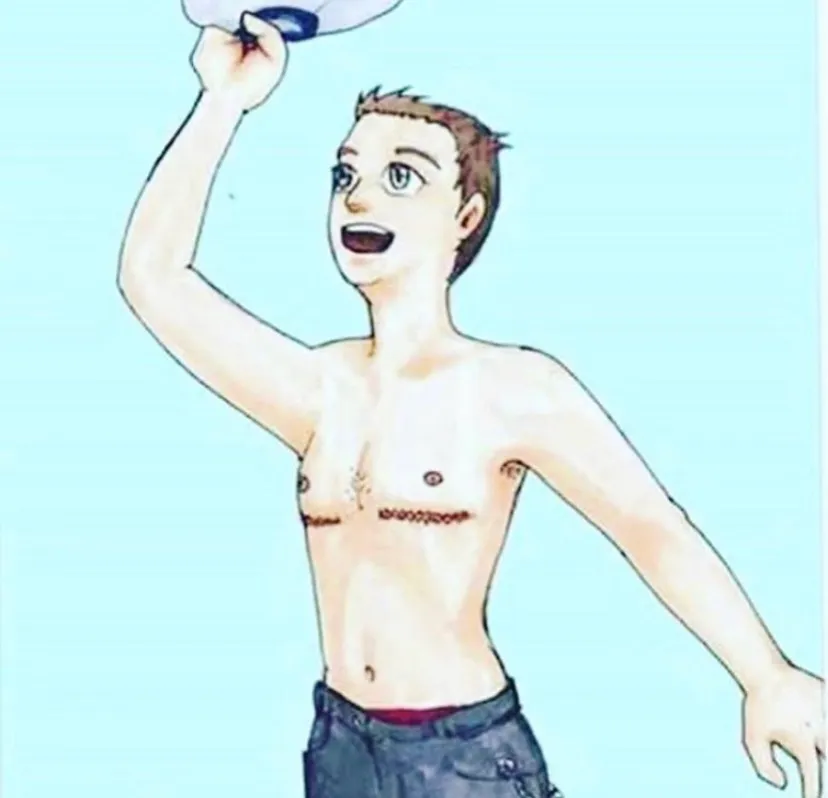
Chest contouring surgery is an important step in transitioning from female to male and greatly helps in the treatment of dysphoria. It is the surgery most often sought by trans men.
This procedure is a challenge for the surgeon, often because of the volume of tissue and the position of the areolas. It has little in common with mastectomies performed on cisgender women to treat breast cancer.
For this reason, surgeons who dedicate themselves to this procedure often have specific training and aim for different outcomes from those of cancer mastectomies.
The aims of this surgery include aesthetic contouring of the chest by removing breast tissue and excess skin, reducing and repositioning the nipples and areolas, releasing the inframammary folds and, in some cases, chest liposuction. In every case we should keep scarring to a minimum and preserve nipple sensation, although this will not always be possible.
Periareolar Technique
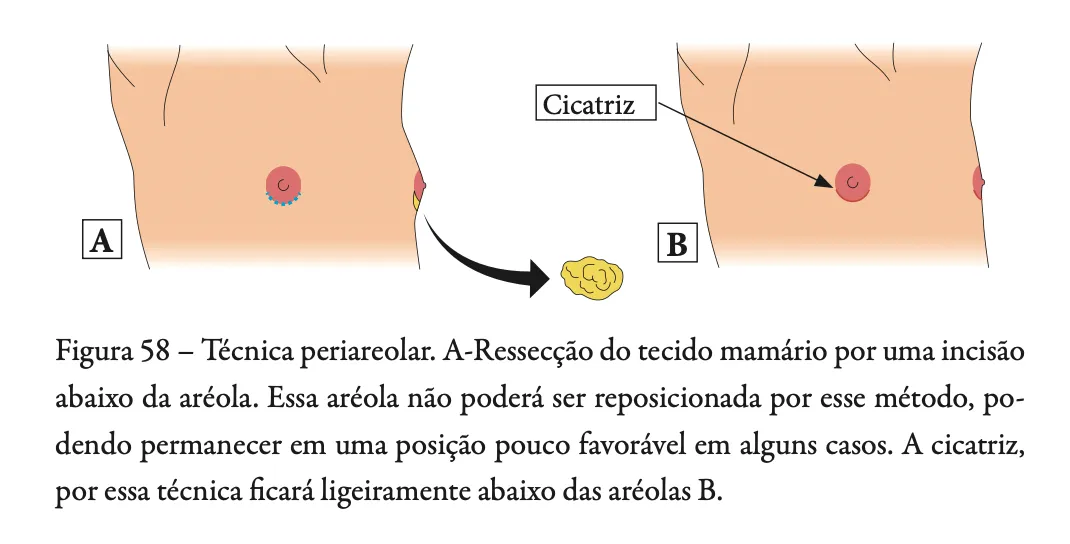
For small breasts that do not droop, this may be the technique of choice, with the areola reduced by removing its lower part. The disadvantage of this technique is that it does not allow the areola to be repositioned.
A variation of the technique (purse string) with an areola graft can be used for larger breasts with slight drooping, requiring a small amount of skin to be removed.
With this technique the scar is limited to the area around the areolas, although in some cases it may become somewhat raised or distorted.
Inframammary Technique (Double Incision)
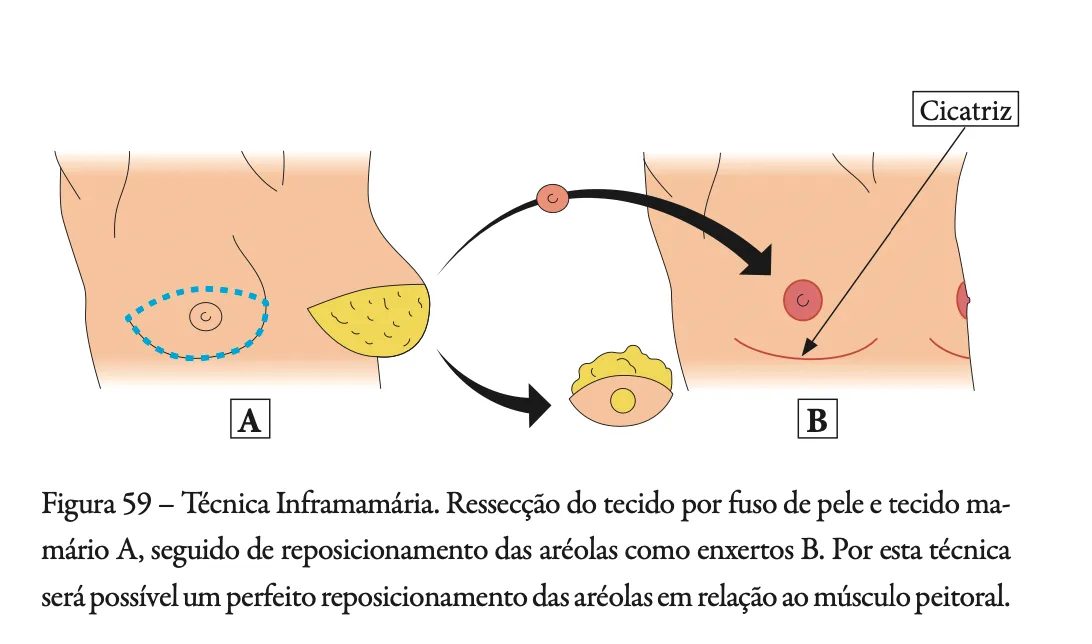
Indicated for patients with larger breasts that droop, it allows a significant amount of subcutaneous tissue and skin to be removed. It allows the areolas to be repositioned as grafts and the inframammary fold to be repositioned below the line of the pectoral muscle.
In some cases, liposuction of the side of the chest wall, near the underarms, may be indicated to improve the contour.
A special dressing will stay on the nipple graft for one week and the drains will be removed between 24 and 48 hours. Discomfort after surgery is usually mild to moderate and is controlled with painkillers.
Arm movement should be restricted for the first seven days. This includes driving, lifting or reaching for objects. After one week, normal daily activities can be resumed; exercise and lifting weights can be resumed 6 to 8 weeks after surgery. The scars are permanent, but they should gradually fade during the first year after surgery. The patient should avoid sun exposure during this period.
Frequently asked questions
When is the periareolar technique indicated?
For small breasts that do not droop. A variation (purse string) with an areola graft can be used for larger breasts with slight drooping. The scar sits around the areolas, and this technique does not allow the areola to be repositioned.
When is the inframammary technique (double incision) indicated?
For larger breasts that droop. It allows more tissue and skin to be removed, the areolas to be repositioned as grafts and the inframammary fold to be repositioned.
What is recovery like?
The dressing on the nipple graft stays in place for one week, and the drains are removed between 24 and 48 hours. Discomfort is usually mild to moderate and is controlled with painkillers. Arm movement is restricted for the first seven days.
When can I return to my usual activities?
Normal daily activities can be resumed after one week. Exercise and lifting weights, 6 to 8 weeks after surgery.
Is nipple sensation preserved?
The surgery aims to keep scarring to a minimum and to preserve nipple sensation, but this is not always possible.
Other procedures
Beginning Your Transition
First steps in gender transition: hormone therapy, psychotherapy, facial and body surgery, voice, and transition during adolescence.
Learn MoreSex Reassignment
Vaginoplasty by penile inversion, with peritoneum or with an intestinal segment, and robotic surgery in selected cases. Aims, techniques and indications.
Learn MoreFacial Feminisation
Facial feminisation: type I and type III forehead contouring, canthopexy, jaw and chin contouring, Adam's apple reduction and associated techniques.
Learn MoreGet in Touch
We are here to help you